
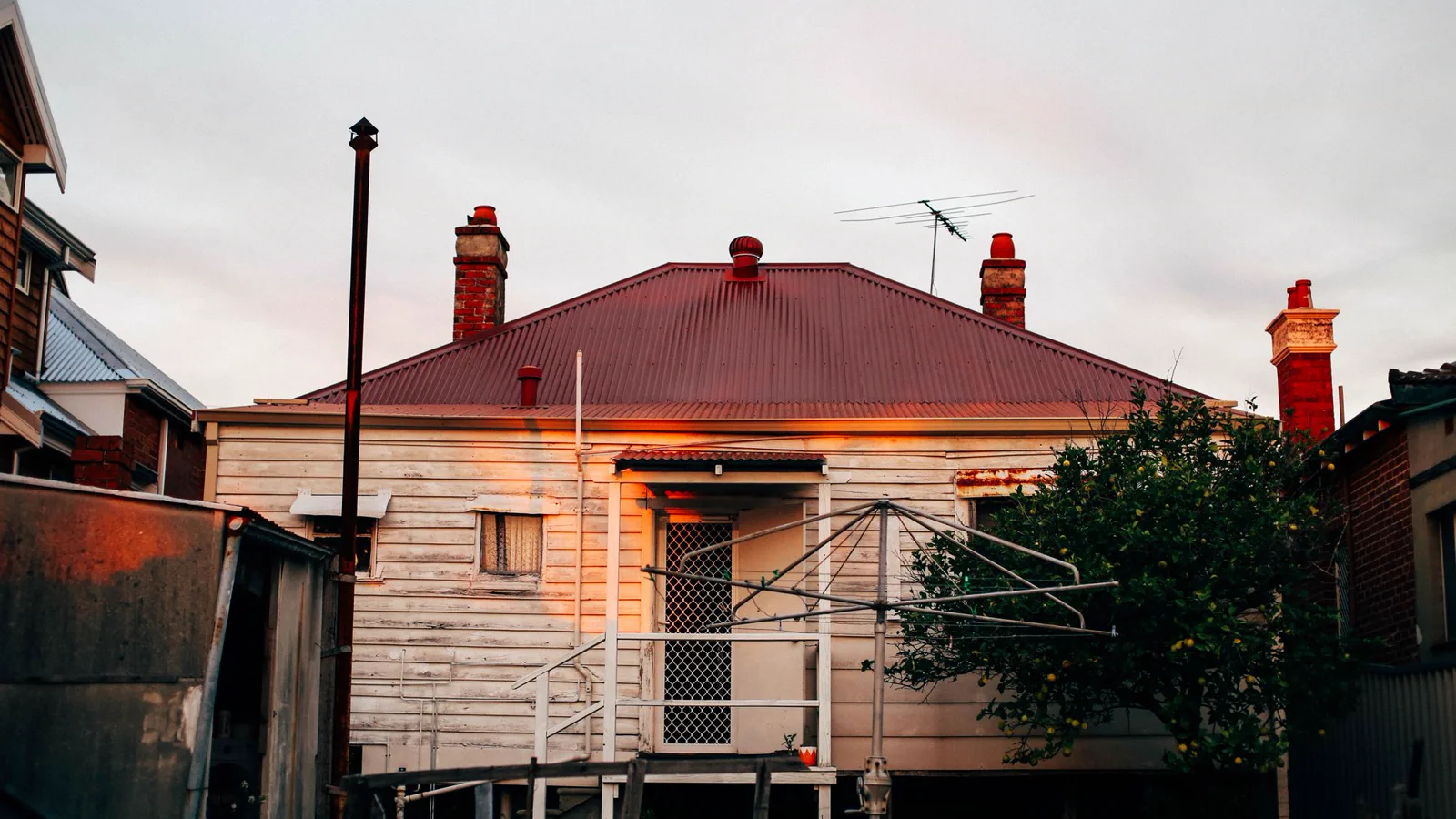
Yes, you can paint weatherboard, and it takes paint well when the boards underneath are sound. How long the job lasts depends far more on preparation than on the paint you choose.
Most Auckland villas and bungalows, and many newer homes, are clad in timber weatherboard, so this is a very common job. The steps below cover how to check your boards, how to prepare them, and when it makes sense to hand the job over.
Can any weatherboard be painted?
Nearly all of it can, but only once you know the timber is healthy. Paint will not hold on boards that are soft, rotten or constantly damp, so check before you buy a single tin.
Walk around the house and look at the lowest boards, the window sills and the corners. These are the places where water sits. Press a screwdriver into the timber. If it sinks in easily or the wood crumbles, that board has rot and needs repair or replacement before painting.
Then look at the south wall, which gets the least sun. Dark green or black patches there are usually mould or algae, which is common in Auckland's humid summers. Mould can be cleaned off, but the cause is often shade, damp or a leaking gutter, and that needs sorting too.
Run your hand over the boards. If a chalky powder comes off on your palm, the old paint is breaking down from sun exposure. Chalking is normal on older paint. It is dealt with by washing and priming, not by painting straight over it.
How do you paint weatherboard step by step?
Wash, scrape, sand, repair, prime, then apply two coats of exterior paint. That order matters, and skipping a step is the most common reason paint fails early.
- Wash the house. Use a house wash product and a soft brush or a low pressure rinse. Salt from the harbours and west coast settles on walls, and paint will not stick to a salty or dusty surface. Let the boards dry fully, which can take a couple of days.
- Scrape loose paint. Remove anything that is flaking or lifting. Leave paint that is firmly attached.
- Sand. Smooth the edges of scraped areas so they do not show through the new coats, and lightly sand glossy old paint so the new coat can grip.
- Repair. Fill nail holes and small cracks with an exterior filler. Replace rotten sections of board. Seal gaps where boards meet window frames and corners with a paintable exterior sealant.
- Prime bare timber and repairs. Bare wood drinks paint unevenly. A primer made for exterior timber seals it and gives the top coat something to hold. Resene has advice on exterior preparation in its homeowner guides.
- Apply two coats. Brush or roll the first coat, let it dry as the tin says, then apply the second. Working along the length of the board, one board at a time, helps avoid lap marks.
Paint from the top of the house down. Do the soffits and fascias first, then the walls, then the trims and doors.
If you have replaced a board, paint the cut ends as well. End grain soaks up water faster than any other part of the timber, and a missed end is where new rot often starts.
What paint is best for weatherboard in Auckland?
Use a good quality water based exterior acrylic made for timber, in a finish that suits the board. Cheap interior paint or a thin exterior paint will chalk and fade quickly in Auckland's strong UV.
Water based acrylic paints stay flexible as timber swells and shrinks with the weather, which helps stop cracking. Both Resene and Dulux New Zealand make ranges for exterior weatherboard, and their stores can match a product to your house.
A few points help when you choose:
- Low sheen or satin is the usual choice for walls. It sheds water and wipes clean better than flat paint, and it shows less of the board's surface flaws than gloss does.
- Gloss or semi-gloss suits trims, sills, doors and window frames, where the paint takes more wear and needs to wash easily.
- Dark colours soak up more heat. On a north or west wall in full sun, a very dark colour can make the boards move more, so check that the paint you pick is rated for the colour you want.
Ask the paint store whether the product you are buying already includes a mould inhibitor. Shaded south walls in Auckland benefit from one.
Can you paint over peeling paint or old lead paint?
You can repaint peeling weatherboard, but the loose paint has to come off first, and if the house is older you need to treat the old layers with care. New paint over flaking paint will flake off again along with what is under it.
Houses built before the 1980s may have lead in the old paint, and many Auckland villas and bungalows have layer upon layer built up over decades. Dry sanding or burning off old paint can release lead dust, which is harmful, especially to children and pregnant women. Test kits are sold at hardware stores, and WorkSafe publishes guidance on working safely around lead based paint.
If the test is positive, wet scraping, keeping dust contained and cleaning up carefully are the basics. If a large area of old paint is failing, this is often the point where people decide to call someone in.
When is the best time to paint weatherboard in Auckland?
Late spring through to autumn is the best window, when there are several dry days in a row and the boards are fully dry. Auckland's wet winters make it hard for paint to cure properly, and damp boards trap moisture under the new coat.
Pick a day with a mild temperature and no rain forecast for the next day or two. Avoid painting in direct midday sun, because paint dries too fast on hot boards and can leave brush marks. Early morning dew can also leave boards damp, so wait until it has burned off. The MetService forecast is useful before each coat, not just before the first one.
Painting a house in stages, one wall at a time following the sun, often works better than trying to do everything at once.
How long will a painted weatherboard house stay looking good?
It varies with the paint, the preparation, how much sun and salt the walls get, and how well the boards are maintained. Sheltered walls last longer than walls that face the weather and the sun all day.
Our post on how often to repaint a house in Auckland goes into the timing in more detail. As a rule, a wall that is washed regularly and has small paint failures touched up quickly will outlast one that is left alone until it looks bad.
What affects the cost of painting weatherboard?
Several things move the cost, and the size of the house is only one of them. Knowing them helps you compare quotes properly and spot when something has been left out.
- Access. A single storey house is simpler than a two storey one. Steep sites, tight gaps between houses and high gables mean scaffolding or extra equipment.
- Condition of the boards. A house that needs only a wash and two coats takes less work than one with a lot of old paint to remove.
- Repairs found. Rotten boards, damaged sills and failed sealant all have to be fixed first, and you often only find them once the prep starts.
- Number of coats. A big colour change, or bare timber, may need extra coats.
- Size and detail. Plain walls are quicker than a house with many windows, decorative trims and fretwork.
- Lead paint. Safe handling of old paint takes more time and care.
The house painting cost guide goes through these in more detail. When you compare written quotes, ask what is included, in writing, so you are comparing the same job each time.
Do you need consent to paint weatherboard?
No, repainting weatherboard does not normally need a building consent. Consent is for building work such as structural changes, new cladding or changes that affect weathertightness, and a normal repaint is not in that group.
If you are replacing a lot of boards, or the cladding has been damaged by water, check before you start. The page on whether you need consent at building.govt.nz sets out the basics. If your house is heritage listed, Heritage New Zealand is the place to check whether special rules apply to colour or materials.
When should you get a professional to paint your weatherboard?
If the house is one storey, the boards are in decent shape and you are comfortable with a brush, a wash and a repaint is a reasonable weekend project for a handy homeowner. It takes longer than people expect, but the skills are not hard.
It stops being sensible in a few cases:
- You would be working above a safe height. Falls from ladders are a real risk, and scaffolding is the safer way to work on a second storey.
- The boards have widespread rot, or you find water damage as you go.
- The house is old enough that lead paint is likely, and a lot of paint has to come off.
- The paint is failing in large patches, and the cause is not clear.
- You have a short dry window, and the job is too big to finish in it.
A professional crew brings the access gear, the repair skills and the speed to make use of a dry spell. Our painting service covers exterior weatherboard, and the projects page shows the kind of work we do. Older villas in suburbs like Mt Eden often need the extra prep described above, and the Mt Eden painters page has more on that.
If you would like us to look at your weatherboard, text us your suburb and the job, and we will get back to you.
What we do about this
Want this done on your place?
Text the suburb and what needs doing. Photos help. We will tell you straight what is involved.