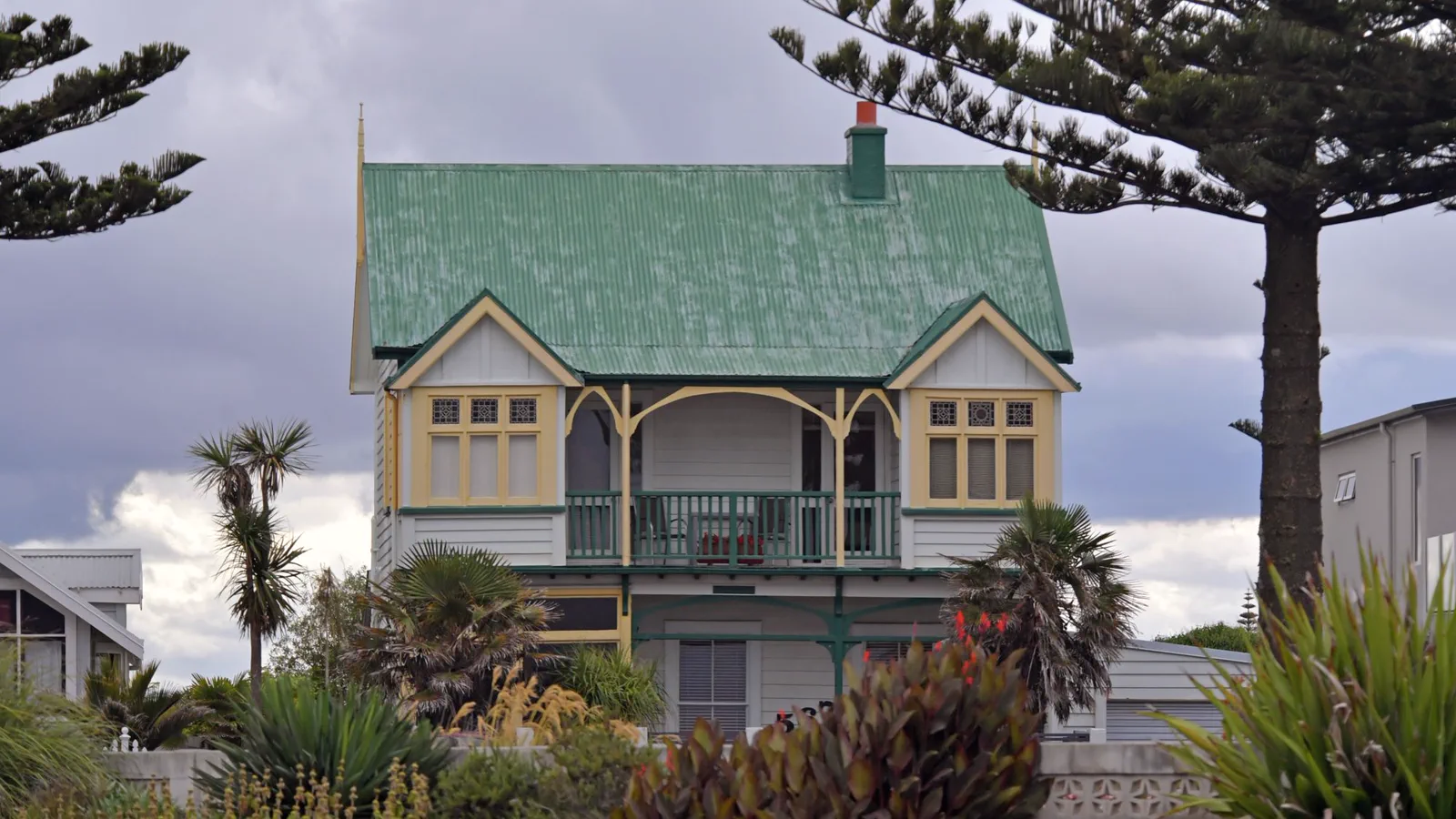
A metal roof in Auckland is commonly recoated every 10 to 15 years, though salt, sun and the state of the old coating can bring that forward or push it back. The roof itself can outlast its paint by a long way, so the coating is what you are really looking after.
Recoating means cleaning the roof, fixing any rust or loose fixings, and applying new paint made for metal. People also call it roof painting, roof repainting or roof coating. The words differ, the work is the same.
How often should a metal roof be recoated in Auckland?
Treat 10 to 15 years as a rule of thumb, not a deadline. Roofs close to the harbour or the west coast tend to sit at the shorter end, and sheltered inland roofs at the longer end.
Several things set the real number for your house:
- How close you are to the sea, because salt in the air attacks paint and bare metal.
- The age and type of the original coating.
- How much sun the roof gets, since strong UV breaks paint down.
- How well the last job was prepared and applied.
- Whether the roof is steep or low pitched, as water lingers on flatter sections.
Paint makers publish guidance on how their coatings perform. The Resene homeowner pages are a good place to see what a manufacturer expects from a product.
The condition of the roof matters more than the calendar. A roof that looks sound at 15 years can wait. A roof that is chalking and rusting at 8 years should not.
How do you know a metal roof needs recoating?
Recoat when the paint is fading, chalking or peeling, or when rust has started to show. You can check most of this from the ground, and some of it from a ladder at the gutter.
Here is what to look for:
- Fading. The colour looks pale or patchy, especially on the sunny side.
- Chalking. Rub a hand over a sheet within reach. If a powdery residue comes off on your palm, the paint is breaking down.
- Rust spots. Small orange or brown specks, often near edges, laps and nail or screw heads.
- Peeling or flaking. Paint lifting in sheets or curls.
- Moss and lichen. Green or black growth on shaded sections, which holds moisture against the metal.
- Stains running from fixings. Brown streaks below screws mean water is getting in or rust is starting.
Stand back across the road and look at the whole roof. Patchy fading shows up far better from a distance than from your back lawn. Check the gutters too. Flakes of paint and rust grit collecting in them are a good hint that the coating is letting go.
Why do Auckland roofs wear out faster than you might expect?
Auckland has strong UV, humid summers and salt carried inland by the wind, and all three age a roof coating. Salt is the biggest factor near the water, which is a lot of the city.
UV fades pigment and slowly breaks down the paint film. NIWA publishes climate information for New Zealand, and you can see how much sun and rain the region gets on the NIWA site. Humid weather keeps moss and mould growing on shaded roof faces. Salt settles on the surface and speeds up rust wherever the coating has worn thin.
Corrugated iron and long-run steel are common on Auckland villas, bungalows and newer homes alike. Old corrugated iron often carries many years of previous paint and some surface rust already, so it needs more preparation than a newer pre-painted sheet.
What happens if you leave a metal roof too long?
Leave it too long and rust spreads, and the job turns from a recoat into repairs. Rust that has eaten through a sheet cannot be painted over. The sheet has to be patched or replaced.
Paint that has failed completely also needs more work to remove before anything new goes on. That takes more time than recoating a roof that is merely tired, and time is where most of the cost sits.
If your roof is already in poor shape, our guide on roof painting vs roof replacement explains how to tell which one makes sense.
What does recoating a metal roof involve?
A proper recoat has four stages: wash, repair, prime and paint. Skipping or rushing any of them is a common reason a new coating fails early.
- Wash. The roof is cleaned of dirt, moss, lichen and chalky residue. Without this, new paint will not stick.
- Repair. Rusty patches are treated, loose or missing fixings are replaced, and flashings and laps are checked for gaps.
- Prime. Bare or rusty areas get a primer made for metal.
- Paint. Usually two coats of a roofing paint suited to the type of metal.
Paint makers give directions for their own products, and those directions matter. A coating only performs as intended if the surface is prepared and the coats are applied the way the maker specifies. Check the product data on the Resene or Dulux NZ sites for the system you plan to use.
If you would rather have someone handle the whole job, that is what our roof painting service covers.
Is there a best time of year to recoat a roof?
The best time is a dry spell from late spring through autumn, when the roof is dry and the days are warm. Auckland's wet winters make the window shorter than most people expect.
Paint needs a dry surface and settled weather while it cures. Morning dew, afternoon rain or a cold snap can all spoil a coat. MetService gives local forecasts, and it is worth watching them several days ahead rather than just one. Our post on the best time of year to paint a house exterior in Auckland covers the seasons in more detail.
What affects the cost of recoating a metal roof?
The cost depends on the size of the roof, its condition, how hard it is to reach and how many coats it needs. Repairs found once the roof is washed can change the picture as well.
The main factors are:
- Roof size and shape. More area and more hips, valleys and penetrations mean more time.
- Access. A steep pitch, a two storey house or a tight section needs more scaffolding or safety gear.
- Condition. Heavy moss, chalking or rust takes longer to prepare.
- Number of coats. A tired roof may need a primer coat plus two topcoats.
- Repairs. Replacing fixings, flashings or the odd sheet adds to the job.
Because repairs often only show up after cleaning, a sensible quote should say what happens if extra work turns up. Our house painting cost guide explains how these same factors work across a whole house.
Can you recoat a metal roof yourself?
A handy homeowner can wash a roof and touch up small areas, but a full recoat is not a good do-it-yourself job for most houses. The main reason is the risk, not the painting.
Falls from roofs are a serious cause of injury in New Zealand, and WorkSafe has guidance on working at height. Metal is slippery when wet, and even a light film of dew or fresh paint can make it dangerous.
Sensible things to do yourself, from the ground or a safe ladder position:
- Look for the signs listed above.
- Clear leaves and debris from gutters.
- Take photos of rust or peeling areas to show a tradie.
Things to leave to a professional:
- Walking on the roof to wash and paint it.
- Replacing sheets, flashings or fixings.
- Working on steep or high roofs.
When should you get a professional to look at a roof?
Get someone to look if you can see rust, if the paint is peeling in patches, or if the roof is steep or two storeys up. A short inspection will tell you whether you need a recoat now or can wait another year or two.
It is also worth getting someone in if your roof is old and you do not know what is on it. Houses built before the 1980s can have older coatings, and some old paint can contain lead, so it should be handled with care. If any roof work involves replacing sheets, check the basics on whether you need consent at building.govt.nz, since the rules can differ between repairs and replacement.
When you compare people, ask what is included, in writing: the wash, the repairs, the primer, the number of coats and the product being used.
If you would like us to take a look, text us your suburb and what you can see on the roof, and we will point you in the right direction.
What we do about this
Want this done on your place?
Text the suburb and what needs doing. Photos help. We will tell you straight what is involved.