
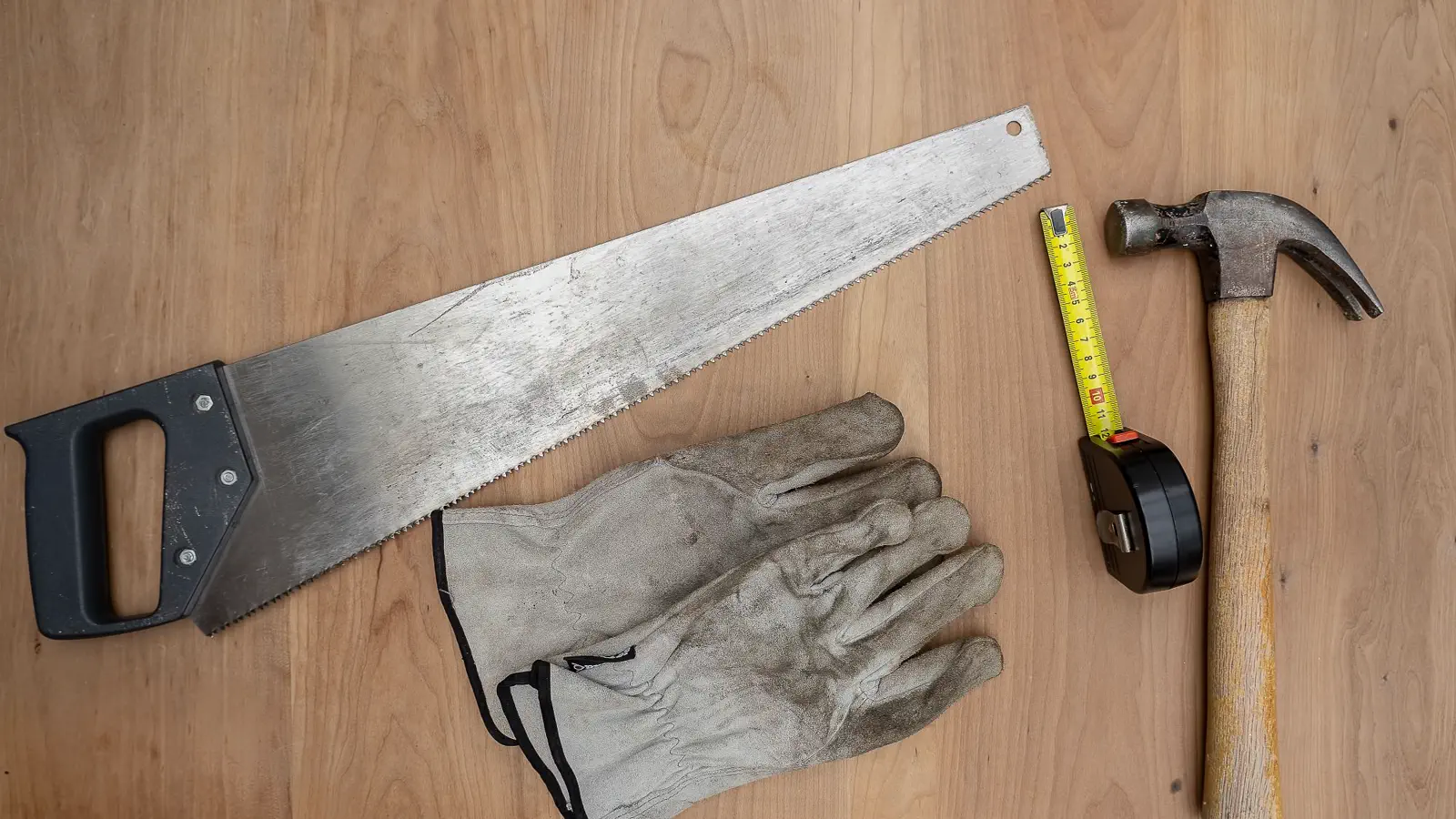
Yes, you can do some carpentry yourself, and many handy homeowners do. Fixing a gate, replacing a rotten trim board or hanging a door are sensible jobs to try, but anything that holds the house up or keeps water out of the walls is better left to a trade.
The real question is where your line sits. That depends on the job, the tools you own, how much time you have and how a mistake would show up later. This post helps you place the line for your own house.
What is carpentry all about?
Carpentry is building and repairing things made of timber. In a house, that means the frame, the floors, the weatherboards, the window and door surrounds, the decks, the stairs and the fixed joinery inside.
It splits into two broad kinds. Rough carpentry is the structural side, such as framing, floor joists, roof timbers and decks. Finish carpentry is the visible side, such as skirting boards, architraves, door hanging, shelving and trim.
Most of what a homeowner meets is repair work. Boards rot, sills soften, doors stick and decks loosen. In Auckland, timber gets a hard life from strong UV, salt carried in from the harbours and west coast, and a long wet winter. A lot of carpentry here is really about finding where water got in and putting sound timber back.
Can a beginner really do carpentry?
A beginner can learn the basics and do simple jobs well. Measuring twice, cutting square and fixing straight are skills you build with practice, and a small first project is the best teacher.
Start with something forgiving. A garden gate, a set of shelves or a replacement fence rail will teach you how timber moves, how to drive screws without splitting the end, and how to check for level and plumb. If you get it wrong, you lose a few offcuts and an afternoon.
Where beginners get caught is work that looks easy but hides a problem. Swapping a short length of rotten board seems simple until you find the framing behind it is wet too. Learn on jobs where a mistake is visible and cheap, not buried and expensive.
What carpentry jobs can a homeowner do themselves?
Jobs that are not structural, sit close to the ground and are easy to reach suit most homeowners. Some good first projects:
- Replacing a loose or split fence paling or gate
- Fitting skirting boards or architraves inside
- Putting up shelves, a coat rack or simple storage
- Adjusting or rehanging a sticking interior door
- Replacing a few damaged deck boards on a low deck
In each case the timber is accessible and you can see what you are doing. The tools are modest as well. A tape, a square, a drill and a decent handsaw will cover most of it.
Before you start, check what is behind the damage. Press a screwdriver into the board and the timber around it. If the tip sinks in easily, the rot has spread past what you can see, and the job is bigger than a patch.
Which carpentry jobs should you leave alone?
Leave anything structural, anything high up and anything that opens a wall to someone who does it every week. Mistakes here can cost far more than the job itself, and some can be unsafe.
Structural work includes removing or moving a wall that carries load, altering roof framing, replacing floor joists and building a deck that sits high off the ground. These affect how the house stands up, and a fault may not show for months.
Weather-tightness is the other danger area. Joins around windows, the base of cladding and deck-to-wall connections are where water gets in and rots the frame from the inside. BRANZ, the building research body, publishes guidance on how this goes wrong, and you can start from the BRANZ site if you want to read more.
Height matters too. Working off a ladder on a two storey house is one of the more common ways homeowners get hurt. WorkSafe has general guidance on working at height, and a sensible rule is that if the job needs scaffolding, it is no longer a quick afternoon fix.
Do I need building consent for carpentry work?
Some carpentry needs building consent and a lot of it does not. Minor repairs and maintenance using similar materials in the same place are often exempt, while structural changes, higher decks and changes to the outer shell of the house often are not.
The rules have detail, and your council makes the final call on your property. The do I need consent page on building.govt.nz is the right starting point. It explains what is exempt and what is not, and it is worth reading before you buy any timber.
There is another basic worth knowing. The law limits who can carry out certain kinds of building work, especially work that affects the structure or weather-tightness of the house. Even where you are allowed to do the work yourself, it still has to meet the Building Code, and the building code compliance section explains what that means.
Check first and build second. Putting right something built without consent is far harder than asking up front.
Does the age of my house change the job?
Yes, a lot. Older villas and bungalows tend to have hard, dense timber, thick layers of old paint, and framing sizes that no longer match what the timber yard sells.
Lead is possible in paint on houses built before the 1980s. Sanding or scraping old paint during carpentry sends dust into the air, so think about that before you start cutting or sanding trim. Resene's homeowner pages have general information on dealing with old paint, and they are worth reading before you take a sander to anything.
If your home is older and has heritage value, there may be extra rules about what you can change on the outside. Heritage New Zealand is the place to start if you think that applies to you.
Newer houses have their own quirks. Fibre cement and plaster cladding need careful handling at joins and edges, and a poor cut or fixing can let water in behind the surface.
Should I do carpentry before painting?
Yes, finish any timber repairs before the paint goes on. Paint over rotten or loose timber fails early, because it has nothing sound to hold on to.
That is why carpentry and painting go hand in hand on most exterior jobs. Soft sills, cracked weatherboards and lifting trim get repaired, then primed, then painted. Skip the repairs and the new paint can look fine for a season, then peel and bubble from underneath.
If you have a weatherboard house, our post on painting weatherboard once the boards are sound covers what to check first. It is a useful companion to this one if your carpentry is part of a repaint.
A few quick checks you can do on your own house:
- Look at the south and shaded walls, where damp lingers and mould and rot start first
- Press a screwdriver into window sills and the bottom edge of the boards
- Run your hand over the boards for chalk or lifting paint
Anything that feels soft is carpentry work, not painting work.
What affects the cost of carpentry work?
The cost depends on access, the condition of the timber, the size of the job and what turns up once the old material comes off. A job that looks small from the ground can grow once someone sees the frame behind it.
Access is a big one. Work at ground level is quick, while work that needs scaffolding or a tall ladder takes longer and needs more setup. Condition matters just as much. A single soft board is a quick swap, but rot that has run into the framing means more cutting out and more rebuilding.
Size and finish both count. A long run of cladding takes more than a short one, and a job that has to match an old profile, such as villa mouldings, takes more time than fitting standard timber. Repairs found along the way count too, since one problem often leads to another once the cladding is lifted.
If carpentry is part of a repaint, it affects the overall budget as well, and our house painting cost guide explains what moves the total. When you compare people for any carpentry job, ask what is included, in writing, so you are comparing like with like.
When should I get a professional?
Get a professional when the job is structural, high up, hidden behind cladding or likely to need consent. Also get one if you are unsure what you will find once the old timber is removed.
A handy homeowner can do a lot. You can replace a gate, hang a door, fit trim and fix a few deck boards without much risk. It stops being sensible when a mistake could let water into the wall, weaken the structure or leave you on a ladder at height for hours.
Time is a fair reason too. A job that takes a tradie a day may take you a month of weekends, and the house stays open to the weather in the meantime. In an Auckland winter, that matters.
If you decide it is beyond what you want to take on, our carpentry service covers repairs, replacement boards, trim and joinery, and we can sort the timber so the paint holds afterwards.
If you would like a hand, text us the suburb and the job, and we will tell you what we would check first.
What we do about this
Want this done on your place?
Text the suburb and what needs doing. Photos help. We will tell you straight what is involved.