
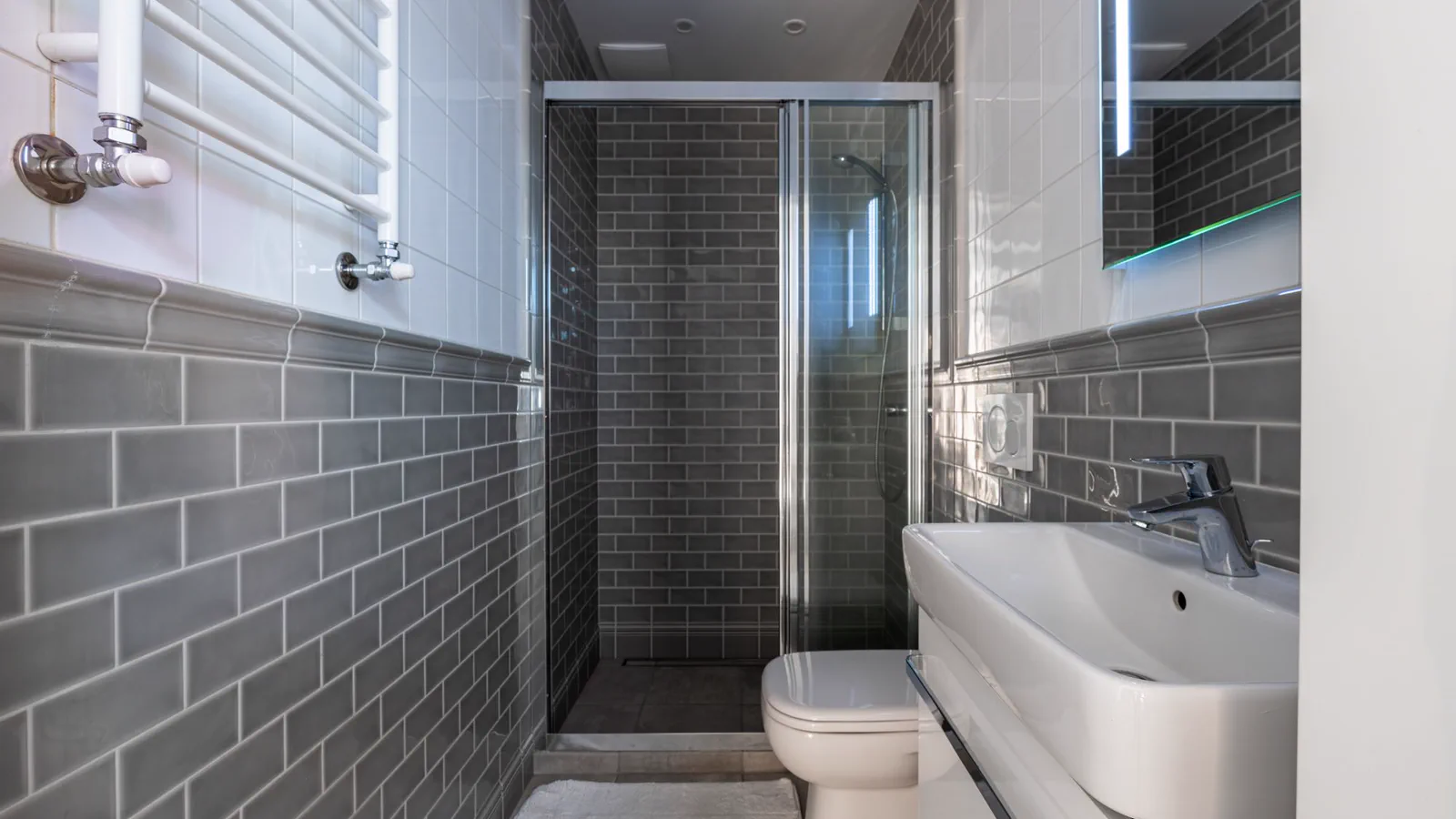
Yes, you can cover bathroom tiles. You can paint them with a tile paint system, lay new tiles over the top, or fit wall panels, and the right choice depends on whether the old tiles are firmly stuck and the wall behind them is dry.
Tired wall tiles are the easy case. The shower floor and the inside of the shower are where covering gets harder, and this post explains why.
Can you paint bathroom tiles?
You can paint bathroom wall tiles, and it is the quickest way to change how a bathroom looks. It works best on walls outside the direct spray of the shower, such as a vanity splashback or the lower walls beside the bath.
Paint does not stick to glazed tile by itself. Tile is smooth and slightly oily from soap and body products, so the surface has to be cleaned, sanded to a dull finish and primed with a bonding primer made for glossy surfaces. Resene, a New Zealand paint maker, has advice for homeowners on preparing and coating tricky surfaces. The maker's data sheet for the specific tile paint is the document to follow.
After priming, a tile paint or a two part epoxy goes on in thin coats. Each coat needs its full drying time, and the paint then needs a longer time to cure before it sees steam and water. In a cool Auckland winter that wait stretches out, and a bathroom with no window or extractor fan can stay damp and soft for days.
For how this fits with the rest of a room, our post on interior painting covers the steps and finishes.
Will painted tiles last in a shower?
Painted tiles last longest where they stay mostly dry. Inside a shower, with hot water hitting the wall every day, any paint will eventually lift at the edges, and the grout lines are the first place it happens.
Think about how the bathroom is used. A family bathroom with a daily shower and wet towels is harder on paint than an ensuite used by one person. Paint on a floor is harder again, because it is scrubbed and walked on. Painting a shower wall is best treated as a refresh, not a permanent fix, with a plan to redo or replace it later.
Grout needs thought too. Paint will cover grout lines, but it will not repair grout that is cracked or crumbling. Water getting behind the tile is the real problem, and paint on top does not stop it.
Which tiles paint well and which do not?
Plain, flat, glazed ceramic tiles paint better than heavily textured, patterned or very glossy ones. A flat tile gives a smooth finish, while a raised pattern shows through the paint and collects soap scum.
Here is what we would look at before deciding:
- Flat ceramic wall tiles in good order: usually fine to paint.
- Textured or relief tiles: the pattern will still show, so they suit people who like the look.
- Cracked, loose or hollow sounding tiles: do not paint. Fix or remove them first.
- Tiles with rust stains or black mould in the grout: find out why before covering anything.
Tap the tiles with a coin or a knuckle. A solid, sharp sound is good. A dull, hollow sound means the tile has let go of the wall, and paint will not hold it there.
Can you tile over old bathroom tiles?
You can lay new tiles over old ones when the old tiles are flat, firmly stuck and dry behind. It saves the mess and time of hacking the old tiles off, and for a bathroom that is otherwise in good order it is a reasonable choice.
The old surface still needs preparation. It is cleaned, degreased and keyed, and the adhesive has to suit both the new tile and the surface underneath. The adhesive maker's instructions decide what is allowed.
There are downsides. New tiles on top of old ones add thickness, and that changes things you may not have thought about:
- Door frames, window reveals and the edge of the bath sit closer to the surface.
- Switches, power points and towel rails may need their fixings moved or extended.
- The vanity, mirror and any cabinet along the wall may no longer fit the same way.
- The wall carries extra weight, which matters for older lath and plaster walls.
In a small bathroom the extra thickness can make the room feel tighter. It is worth reading our guide on bathroom refresh vs full renovation first, because covering is not always the answer.
Our tiling service covers both laying over and stripping back, and the choice is made after looking at the wall, not before.
What about wall panels and other coverings?
Wall panels and wet wall sheets can cover tiles, and they have fewer joins than tiles, so there is less grout to keep clean. They are often fixed straight over sound old tiles, with the edges and corners sealed with a bead of silicone.
The checks are the same as above. The surface must be flat, the panel has to suit a wet area, and the joins and edges must be sealed well, because water that gets behind a panel stays there. Panels are also harder to repair when one part is damaged, as you may need to replace a larger section.
Wallpaper, peel and stick tiles and decals are sometimes sold as bathroom fixes. In a room with steam they tend to curl at the edges. They suit a dry powder room better than a shower.
How do you check the old tiles before covering them?
Check three things before you spend anything: whether the tiles are stuck, whether the grout and sealant are sound, and whether there is any sign of water behind them. If any of those fail, covering the tiles hides a problem that keeps growing.
You can do most of the checks yourself:
- Tap the tiles in rows, and mark any that sound hollow.
- Look at the grout around the bath and the shower. Cracked or missing grout lets water behind the tile.
- Press the wall below the window, the skirting and the bottom row of tiles. Soft or spongy means moisture has been getting in.
- Look at the ceiling and any south facing wall. In humid Auckland summers, black mould spreads quickly in shaded, poorly ventilated rooms.
- Check the extractor fan. A fan that vents into the ceiling space, or does not run long enough, keeps the bathroom wet.
BRANZ, the building research body, publishes research on moisture and ventilation in New Zealand homes. A damp room needs the moisture fixed at the source, not just coated over.
If the walls turn out to be wet, there is leakage you cannot see, or the bath has moved away from the wall, stop. Covering now only makes the repair bigger later.
Do you need building consent to cover bathroom tiles?
Painting or tiling over existing tiles usually does not need building consent, because it is cosmetic work. Consent can come into play once the work involves waterproofing, plumbing or the structure of the wet area.
The rules are set by the government, not the tradie. building.govt.nz has a plain page on whether you need consent, and a page on the building code for the standard that wet area work must meet. Read these before you start if you are unsure, and check with Auckland Council if your project is more than a surface change.
What affects the cost of covering bathroom tiles?
The cost depends on the size of the area, the condition of the tiles and walls, and the method you choose, so it moves a lot from one bathroom to the next. We do not put a figure on it here because it depends on what is found on site.
These are the main things that move it:
- Size. More wall and floor means more preparation, more coats or more tiles.
- Condition. Cracked grout, loose tiles and soft patches all need repair before covering.
- Access. A small, tight bathroom takes longer to work in than an open one.
- Number of coats. Paint systems need a primer and several coats with drying time between.
- What is found. Moisture damage or mould behind the tiles can turn a cover up into a repair.
- Finish. New tiles, trims and fittings add material and labour.
Ask what is included, in writing, from anyone who quotes. A single line that just says prep tells you very little. You want to know what happens to the grout, the silicone, the fittings and the fan.
Which option should you choose?
Choose paint for a quick, low effort refresh on sound tiles outside the wet zone. Choose new tiles or panels over the top if the old tiles are firm and you want something that lasts longer. Choose removal if the tiles or walls are not sound.
| Situation | Best option |
|---|---|
| Sound tiles, dated colour, light use | Paint |
| Sound tiles, daily use, want longer life | Tile or panel over |
| Hollow or loose tiles | Remove and retile |
| Soft wall or mould behind tiles | Fix the cause, then retile |
| Whole bathroom feels tired | Think about renovation |
If you are thinking about changing more than the tiles, our bathroom renovations page explains what a bigger job involves.
When should you get a professional?
A handy homeowner can paint wall tiles in a dry area, replace a short run of cracked silicone and clean up grout. Beyond that, a professional is worth having.
Call someone in when:
- Tiles sound hollow in more than a few spots.
- You find soft or damp wall lining.
- The shower floor or the waterproofing is involved.
- The house was built before the 1980s and you will be sanding old paint. Older layers can contain lead, and WorkSafe has guidance on working with it.
- You want new tiles laid over old ones and need the thickness, trims and fittings sorted out.
Waterproofing is the part that should not be guessed. A bathroom that looks fine can still be leaking behind the finish, and the damage often shows only when it is costly to deal with.
What should you do next?
If you are not sure which way to go, text us your suburb and the job, and we will tell you what we would check first.
What we do about this
Want this done on your place?
Text the suburb and what needs doing. Photos help. We will tell you straight what is involved.