
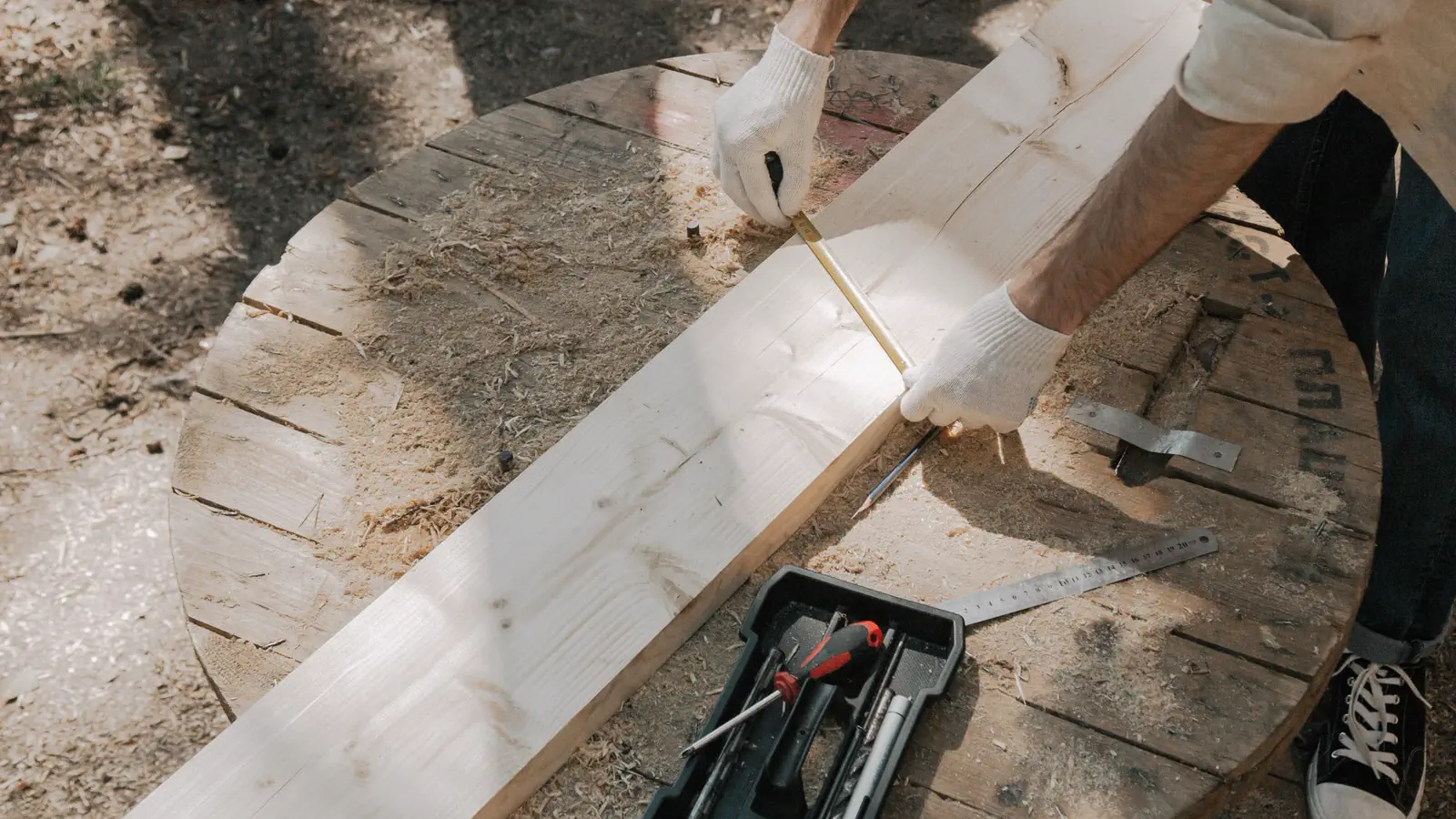
Carpentry work is the cutting, shaping, fitting and repairing of timber (and timber-based boards) in a building. In a house, that covers anything from framing a wall to hanging a door, replacing a rotten weatherboard or building a deck.
If you have ever had a sticking door fixed, a window sill repaired or a new set of shelves built in, you have already paid for carpentry. It is the part of a house that holds things up, keeps weather out and makes the rooms usable.
What counts as carpentry work in a house?
Carpentry work is any job where timber is measured, cut and fixed in place. It falls into two broad groups: structural work that holds the house up, and finishing work that you see and touch every day.
Structural carpentry includes:
- Wall framing, floor joists and roof framing
- Bearers and piles under the house
- Lintels over windows and doors
- Decks, pergolas and stairs that carry weight
Finishing carpentry includes:
- Doors and door frames, hung so they close properly
- Skirting boards, architraves and window reveals
- Built-in shelves, wardrobes and cabinet fitting
- Weatherboard, fascia and soffit repairs on the outside
The line between the two is not strict. A deck is both: the frame under it is structural, and the boards you walk on are finish work. Our carpentry service covers both kinds of job, from a single repair to larger fitting work.
What is the difference between rough and finish carpentry?
Rough carpentry is the hidden structure, and finish carpentry is the visible detail. Rough work is about strength and accuracy. Finish work is about neat joins and clean lines.
A framer building a wall needs it straight, square and strong, but nobody will see the timber once the lining goes on. A finish carpenter fitting a skirting board has the opposite job. A gap of two millimetres at a corner is easy to spot, so they work slowly and fill, sand and scribe the board to the wall.
Many tradies do both. On a small repair, such as replacing a section of weatherboard, one person usually handles the cutting, the fixing and the neat finish at the end.
What carpentry jobs do Auckland houses need most?
Auckland houses most often need repairs where timber meets water: sills, weatherboards, deck boards and the bottom edges of doors. The climate is hard on wood, and the damage tends to start in the same few places.
Several local conditions play a part:
- Wet winters and humid summers keep timber damp for long stretches.
- Strong UV breaks down paint, and bare timber then soaks up water.
- Salt carried in from the harbours and west coast speeds up corrosion of nails and fixings.
- Shaded south walls stay damp, so mould and rot set in more easily.
Older villas and bungalows add their own jobs. Many have sills that have been painted many times, timber windows that have swollen, and verandah boards that have soaked up decades of rain. Replacing a rotten section is far better than painting over it, which only hides the problem for a season or two.
If you want to read more on how timber houses age and fail, BRANZ is the building research body and a good place to start.
How can I tell if my house has rotten timber?
The simplest check is to press a screwdriver into the wood. Sound timber resists. Rotten timber is soft, crumbles or lets the tip sink in easily.
Walk around the outside of your house and check these spots first:
- Window sills, especially the bottom corners
- The lower edge of weatherboards near the ground
- Door frames and thresholds
- Deck boards and the posts they sit on
- Fascia boards under the gutters
Look at the south wall too. It gets the least sun and tends to show trouble first. Peeling paint, dark staining, soft patches and open joins are all signs that water has got in.
Cracks in the paint surface are not always a carpentry job. Our post on whether you can paint weatherboard explains when boards are sound enough to repaint and when they need repairs first.
Does carpentry work need a building consent?
Some carpentry work needs a building consent and a lot of it does not. Like for like repairs, such as replacing a rotten weatherboard with the same board, are generally exempt. New structural work, such as removing a load bearing wall or building a large deck, often needs consent.
The rules depend on what you are changing, its size and its height off the ground. A deck that sits high above the ground is treated differently from a low one. The official guidance at building.govt.nz explains the exemptions in plain terms, and it is worth reading before any job that changes the structure.
If you are not sure, ask the tradesperson to check before work starts, and ask for the answer in writing. You can also contact your local council. Work done without a consent it needed can cause trouble later, especially when you come to sell.
What affects the cost of carpentry work?
The cost of carpentry work depends mostly on how much needs doing, how hard it is to reach and what condition the existing timber is in. Every house is different, so a fair price only comes after someone has looked at it.
The main things that move the cost are:
- Size of the job. Replacing one sill is a small repair. Replacing every sill on a villa is a different scale of work.
- Access. Work high on a two storey wall needs scaffolding or ladders set up safely, which adds time. Work under a house can be cramped and slow.
- Condition. Rot often goes further than it looks. A board that seems to need a small patch can turn out to have damage behind it.
- Materials. Treated pine, hardwood and old native timber such as heart rimu all cost and behave differently. Matching an old profile may mean having a new piece milled.
- Finishing. Repaired timber still needs priming and painting to protect it, and that is extra time.
- Repairs found along the way. Opening up a wall or lifting a deck board often shows more work underneath.
When comparing quotes, ask what is included, in writing. One quote might cover priming and painting the repair and another might leave it out. For a broader look at how paint jobs are priced, see our house painting cost guide.
How does carpentry fit with painting?
Carpentry and painting go together, because new or repaired timber must be sealed and painted to last. Bare wood left outside in Auckland weather will soak up water and start to fail within a season or two.
The usual order is simple. Repairs come first, then filling and sanding, then primer, then topcoats. Cut ends of new boards need sealing too, since end grain drinks water faster than any other part of the wood.
Resene has general advice on preparing and coating timber on its homeowner pages.
This is why a painting-led crew handles carpentry as part of the job. Fixing the boards and painting them as one piece of work avoids gaps where weather can get in. It also means the person doing the repair knows how the paint will sit over it.
Can I do carpentry work myself?
A handy homeowner can do small, low risk carpentry jobs. Fitting a shelf, planing a sticking door, replacing a skirting board or fixing a loose deck board are all reasonable weekend jobs with basic tools. Our post can I do carpentry? goes into more detail on where to start.
Some things to keep in mind if you try:
- Measure twice and cut once, and use a sharp saw. A blunt blade splits the timber.
- Use fixings suited to outdoor use, such as hot dip galvanised or stainless steel, especially near the coast.
- Seal cut ends and prime before painting.
- Wear eye and ear protection, and a dust mask when sanding.
Houses built before the 1980s may have lead in the old paint layers. Sanding or scraping those surfaces creates harmful dust, especially for children and pregnant women. If your house is that age, find out what is in the paint before you disturb it.
When should I get a professional for carpentry work?
Call a professional when the work is structural, high off the ground or hidden behind linings. Those are the jobs where a mistake is expensive or dangerous.
Get help if:
- You are removing or changing a wall, or cutting into a beam or joist.
- The job is on a second storey or needs scaffolding. WorkSafe has guidance on working at height.
- You find rot that goes beyond one board, or soft timber in framing.
- The work needs a building consent.
- You want a clean finish on visible joinery and do not have the tools.
A good tradie will look at the problem first, explain what they found and tell you what is included. If you would like a hand with a carpentry or repair job, text us the suburb and the job, and we will take it from there.
What we do about this
Want this done on your place?
Text the suburb and what needs doing. Photos help. We will tell you straight what is involved.